 La
LaWelcome to a Thoughtful Approach to Body Contouring

La-Lipo is about refining your body with treatments that honour what you want and, most importantly, put your safety first. You won't find quackery here — only experienced clinical oversight and aftercare that actually supports recovery.
We blend contemporary hand techniques with common sense. We listen first. Then we suggest what works for your body and your life. Our focus is on results that look natural and feel like you — not dramatic change for the sake of it. Where technique meets compassion, that is where our work begins.
Why Professional Treatment Matters
Choosing a clinic matters. There are three straightforward things that set a responsible practice apart: clinical responsibility, honest guidance, and personalised care. Every procedure takes place in a licensed facility, under the eye of an experienced clinical team that manages all aspects of the process.
Our commitment to safety and transparency means we explain risks in everyday language, we set achievable expectations, and we schedule recovery to suit you. We blend surgical and non-surgical methods so you have options. We never rush a decision. You can ask questions, take time, and learn. After a consultation, nearly everyone feels reassured — they move forward only when they know what is realistic and safe for them.
How Treatment Works — Philosophy and Safety
Our approach is patient-centred. We start by listening and learning what matters to you. Then we match the techniques to your anatomy and goals. Where it can be avoided, we want to avoid invasive measures. Even when surgery is required, we strategize with precision to mitigate risk and promote healing.
Safety is not a tagline. It is a practice. Treatments occur in licensed clinical settings with medical supervision. Infection control, anaesthesia planning, and emergency protocols are standard. We explain risks clearly. You receive step-by-step aftercare guidance. A recovery monitoring team is available for questions throughout.
We also emphasise realistic outcomes. Fat responds to different procedures in ways that vary from person to person. Body contouring shapes — it doesn't slim you down. We strive to deliver consistent, natural results that are sustainable for your lifestyle over the long term.
Who Is Suitable for Body Contouring

Good candidates are generally at or near their realistic body weight, with localised pockets of fat that resist diet and exercise. Liposuction is a sculpting technique, not a weight loss technique. At consultation, we evaluate skin tone, medical history, and personal goals carefully.
We welcome a wide range of patients — from first-timers seeking a small, incremental change, to those wanting more definitive contouring of multiple areas. Non-surgical options are available for patients who prefer no downtime or who have smaller areas to address. The right treatment path depends on the size of the area, desired change, recovery tolerance, and timeline. We help you evaluate trade-offs and make recommendations based on your priorities.
Types of Concerns and Conditions Explained
Body contouring addresses a range of concerns. Some people carry stubborn fat in the abdomen, flanks, or thighs that simply won't shift with exercise. Others notice a double chin, pockets around the inner knees, or fullness in the upper arms that affects their confidence. Some have areas of denser or fibrous tissue, perhaps from previous procedures or from the natural way their body distributes fat.
Skin laxity is another common concern — after weight loss or with ageing, skin may not sit the way it once did. Certain treatments can address both volume and skin quality together. In other cases, patients simply want more defined muscle tone or a subtly sleeker silhouette. Understanding your specific concern is the first step toward choosing the right approach.
Treatment Options and What to Expect
Each treatment below is described with a summary, a description of the process, who it suits, what it feels like, recovery expectations, realistic outcomes, benefits, and notes on the ideal candidate.
Traditional Liposuction
A series of small incisions are made where fat is targeted, and it is then suctioned with very little bleeding and trauma.
Traditional liposuction is a safe and effective way to eliminate fat bulges that don't respond to diet or exercise. The surgeon places tiny, discrete incisions and passes blunt cannulas in order to sculpt the area. The technique is associated with precise shaping of the abdomen, hips, thighs, arms, and other zones. Healing is supported by combining meticulous anaesthesia planning with compression and a staged recovery process.
Ideal for exercise-resistant localised fat pockets and patients seeking definitive contouring.
Tumescent Liposuction
A technique that makes liposuction gentler with reduced bleeding, using a saline and local anaesthetic solution.
Tumescent liposuction is a technique where a diluted solution of salt, local anaesthesia, and vasoconstrictor is used, which enables the fat to be removed more smoothly. The region hardens and swells — becomes tumescent — which makes it easier to extract fat with less blood loss. This method also often eliminates the need for general anaesthesia and provides a more seamless contouring experience. It is widely used for moderate-volume liposuction, with a safety-first focus.
Ideal for patients seeking safer, lower-anaesthesia options and those with several small areas to treat.
Ultrasound-Assisted Liposuction (UAL)
Uses ultrasonic energy to soften fat before removal, aiding contouring of fibrous or resistant areas.
Ultrasound-assisted liposuction uses focused ultrasonic energy to loosen fat cells prior to suctioning them out. This may facilitate fat removal in areas that contain denser tissue, such as the back, male chest, or previously treated areas. In well-trained hands, the method can lead to more polished results. UAL can be used in conjunction with other techniques for tailored shaping.
Ideal for dense, fibrous tissue areas and patients needing secondary corrections.
Laser-Assisted Lipolysis (Laser Lipo)
A minimally invasive method to melt fat and tighten skin using laser energy, with fat gently removed.
Laser-assisted lipolysis delivers controlled energy via laser beneath the skin to liquefy fat and encourage mild contraction of the overlying skin. It is a minimally invasive solution for patients looking to reduce volume modestly and improve skin quality. The procedure typically involves small access points and can be performed under local or light sedation. The thermal effect can accelerate skin retraction in properly selected patients.
Ideal for small to moderate areas and patients prioritizing minimal downtime.
VASER Liposuction
An advanced ultrasound technique that aims to maximize fat extraction while minimizing surrounding tissue damage.
VASER — vibration amplification of sound energy at resonance — is a selective ultrasound system that gently disrupts fat while preserving blood vessels and connective tissue. The aim is cleaner contouring, with less bruising and quicker healing. It is often used for high-definition sculpting, which means more detailed definition of the abs, flanks, and chest.
Ideal for candidates seeking defined sculpting and people with specific shaping goals.
Mini Liposuction — Targeted Lipo
A short, detail-oriented liposuction procedure that focuses on specific small areas with practically no downtime.
Mini liposuction is intended for small areas that resist weight loss — a double chin, inner knees, or small pockets of lower abdomen, for example. The procedure is quicker and often done under local anaesthetic, with sedation if required. Because the treatment area is limited, mini lipo has a gentler recovery and allows for a quicker return to normal activity while still producing meaningful contour changes.
Ideal for first-time surgical patients and people wanting incremental change.
Fat Transfer (Autologous Fat Grafting)
Sculpts fat away from certain areas then uses that same fat to restore volume in other body parts, such as the buttocks or face.
Fat transfer utilizes your own tissue to achieve natural volume in the correct areas. Fat is harvested using liposuction, processed, and then injected into the target sites — buttock augmentation, facial volumisation, and hand rejuvenation, for example. The technique has a twofold effect: contouring wherever the fat is taken from, and natural augmentation in the areas where it is placed.
Ideal for natural augmentation seekers and patients who desire both contouring and volume.
Cryolipolysis — Fat Freezing
A non-surgical technique that cools fat cells, resulting in gradual fat loss without surgery.
Cryolipolysis — also known as fat freezing — freezes fat cells, which the body then naturally eliminates over weeks. Treatments are non-invasive and effective for small-to-moderate pockets of fat in the flanks, abdomen, and upper arms. Sessions run for less than an hour per area. Results progress over time, and multiple sessions may be suggested for additional noticeable change.
Ideal for patients avoiding surgery and those with small, localised areas of fat.
Injection Lipolysis (Chemical Fat Dissolving)
A minimally invasive injection technique that breaks down pockets of fat over multiple sessions.
Injection lipolysis uses approved agents to dissolve small fat deposits. It is often utilized for the chin or smaller areas that need precise, subtle reduction. A series of injections, spaced weeks apart, is required for treatment. Results vary and several sessions may be needed. The technique is about spot reduction, not large-scale body shaping.
Ideal for double chin reduction and small-area contouring.
Radiofrequency (RF) Body Contouring
Non-surgical tissue heating and skin tightening using radiofrequency energy for gradual fat reduction.
RF body contouring provides controlled heating of subcutaneous layers to stimulate collagen and decrease mild fat volumes. It is non-invasive and intended to enhance skin texture and, in some cases, contouring. Sessions are typically short and repeated over a series. It is gentler than surgery, and works well for patients who want a little fat reduction as well as skin firming.
Ideal for early signs of skin laxity and patients seeking gentle, progressive change.
Electromagnetic Muscle Sculpting
A non-invasive treatment using muscle contractions to stimulate tone and help reduce small fat layers.
Electromagnetic muscle-sculpting devices elicit strong contractions not possible through voluntary exertion. Sessions are quick, and a course can tone up target areas such as the abdomen and buttocks. It is not a fat-removal device as such, but it does tone muscle and can add contour when used alongside fat-reduction procedures.
Ideal for tone and definition seekers, and those combining modalities for full contouring.
Realistic Results and Expectations
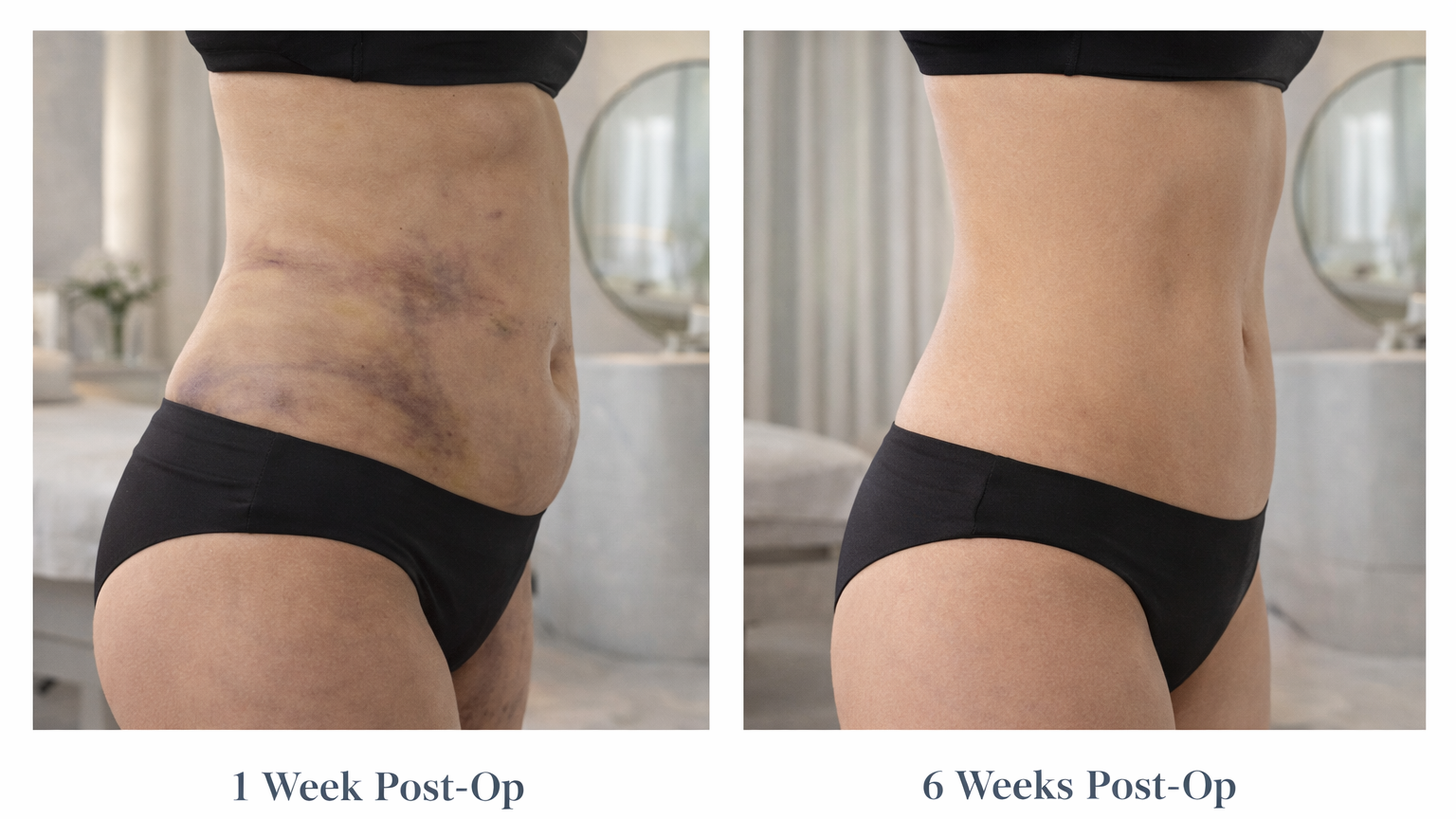
We want every patient to understand that swelling can conceal early outcomes for weeks on end. The final contour usually appears months after treatment. Comparing photographs taken from consistent angles, lighting, and posture gives the most honest picture of change.
Photos taken soon after a procedure typically show bruising and swelling. Waiting at least six to twelve weeks gives a far more representative view. Skin tone changes and temporary loss of sensation can last for months. Results are individual — two people with similar-looking starting points may have different experiences post-treatment because of how their bodies heal.
We present before-and-after images with grounded captions and concrete expectations, always showing authentic change without editorialising. Timeline annotations — such as "six weeks post-op" — are used to convey realistic expectations.
Safety and Professional Standards
Safety underpins every step. All procedures are performed in licensed clinical facilities under the supervision of a qualified medical team. We follow standard infection control, anaesthesia planning, and emergency measures without exception. Risks and benefits are explained in layperson terms before any treatment.
Aftercare is formal and documented. Patients are followed up until their recovery stabilises. We emphasize team oversight and facility licensing as our safety foundation. There is no room for shortcuts — we follow protocols because they protect you.
Aftercare and Maintaining Results
Post-Procedure Aftercare
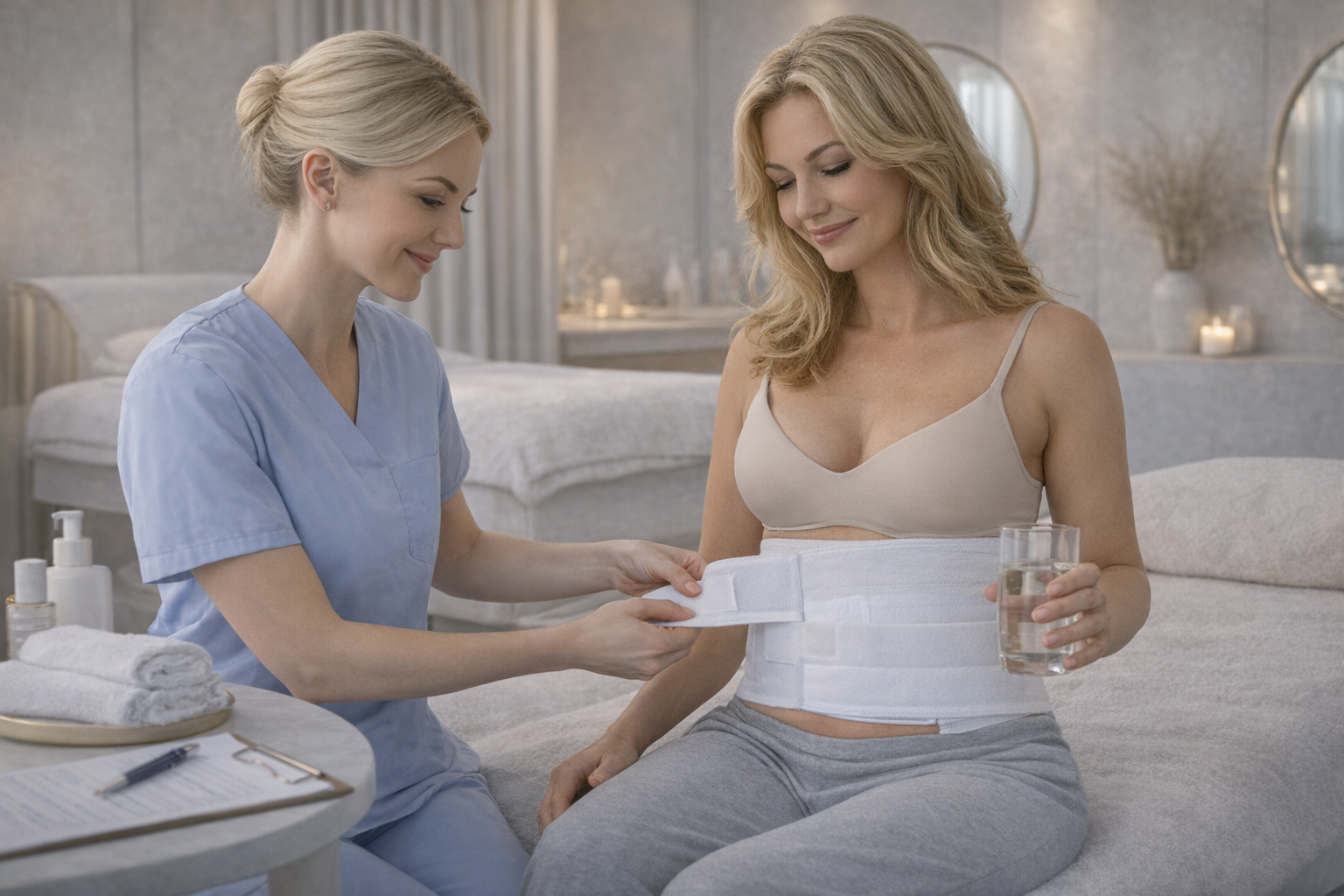
Aftercare is critical to a positive outcome. We provide clear, step-by-step instructions for wound care, compression needs, activity progression, and scar management. Scheduled follow-ups and access to advice for common issues post-treatment are part of the standard programme. We focus on progressive activity, healing-supportive nutrition, and ways to prevent complications with scarring and swelling.
Aftercare can feel like participation in recovery itself — compression, light motion, and consistent monitoring. Like procedures, timelines vary, but most people follow a six- to twelve-week plan with measurable weekly improvement. Proper aftercare promotes healing, reduces complications, and improves the final contour.
The Patient Journey — Step by Step
- Initial Enquiry Get clear, plain-language information about your options. We welcome questions — we encourage curiosity.
- Consultation and Evaluation In-depth, one-to-one consultation. We consider your situation and propose attainable objectives. We cover risks and alternative choices and document a personalised plan.
- Pre-Procedure Planning Pre-operative instructions provided in writing. Advice on medication, smoking, and diet. Scheduling and consent are completed with time to think.
- Treatment Day Licensed facility, routine safety checks, anaesthesia plan. We prioritise comfort and privacy. You are monitored throughout.
- Immediate Aftercare Straightforward guidance on wound care and compression. First follow-up planned within days. Pain control and symptom management provided.
- Recovery and Follow-Up Regular check-ins until healing stabilises. Scar management and compression advice. Final photos and outcome review once swelling has settled.
- Long-Term Support Advice on maintaining results. Alternatives for correction or improvement if required. We are here for questions and future care.
This journey is flexible. Every step is tailored to your needs. We never rush consent — we allow you to decide based on facts, not pressure.
Frequently Asked Questions
Am I a suitable candidate for liposuction?
Good candidates are at or near their realistic weight with localised pockets of fat. Liposuction is a sculpting technique, not a weight loss technique. At consultation, we evaluate skin tone, medical history, and goals.
Is liposuction safe?
Liposuction is generally safe when performed in a licensed facility under proper medical supervision. We clearly explain the associated risks and adhere to anaesthesia and infection control safety protocols.
Will my skin tighten after liposuction?
Liposuction is for fat removal — it does not automatically tighten the skin. Certain procedures, such as laser or energy-based options, can enhance skin tone to some degree. Results depend on skin elasticity and age.
How long is recovery?
Recovery varies. Most people return to light activity in a few days, and to normal exercise after several weeks. Contours do not fully settle for months.
Are results permanent?
Fat cells removed by liposuction do not return to the same area, but nearby fat can expand if a patient gains weight. Stable weight helps maintain results.
Can I combine treatments?
Yes. It is common to combine fat removal with skin-targeting or muscle-toning treatments. We plan combinations carefully for safety and outcomes.
Is non-surgical fat reduction effective?
Non-surgical options can help decrease small pockets over time. They work well for those who prefer minimal downtime. It may take several sessions for the best results.
Will I have scars?
Surgical incisions are kept small and placed discreetly. Scars are minimised and fade over time with appropriate care and scar management methods.
Will I be in pain?
Pain levels vary. Most describe soreness and tightness rather than sharp pain. We offer pain management strategies and well-defined protocols to alleviate discomfort.
How long until I see results?
Initial changes can be seen over weeks as swelling starts to diminish. Final results can take months as tissues settle and scars mature.
What are the risks I need to know about?
Inflammation, infection, or fluid issues are rare risks. We go over these in detail, along with how we manage them, during consultation.
How do I decide between surgical and non-surgical options?
Think about the size of the area, your desired change, recovery tolerance, and timeline. We help you evaluate trade-offs and make recommendations based on your priorities.
Patient Experiences
These anonymised voices represent common encounters — clarity, caring, and gradual, consistent improvement.
"I felt heard from the very first call. Everything was explained by the team, and I was confident at each step."
— N.S."Recovery was easier than I expected. My clothes fit better and I feel more like myself."
— A."The results are natural. Nobody can tell I had anything done, unless I say so."
— M."The aftercare was brilliant. I had questions and they got answered quickly."
— R."Thanks for being honest. The team managed expectations and came through."
— T.Our Approach to Patient Care

Care is patient-centred from the very first conversation. We begin by listening — understanding what matters to you — and then match the right techniques to your anatomy and goals. Where invasive measures can be avoided, we avoid them. Even when surgery is the right path, we strategize with precision to reduce risk and support healing.
We never name-drop credentials we can't verify or use pressure to hurry a decision. Instead, we provide factual, balanced guidance that respects your right to time, to questions, and to honest answers. That is what we consider good clinical care.
Next Steps and What to Know
Before making any decisions, there are resources that can help you understand your options clearly and prepare for what lies ahead.
Your Decision, Your Pace
Choosing to change your body is a personal decision. It is perfectly fine to take time. We provide honest, transparent advice and ongoing support throughout your journey so you have the freedom to decide what works for your life.
We are about measured outcomes, safety with sense, and compassionate care. If you have questions, want to learn more, or wish to explore options without pressure — we are here to help.